
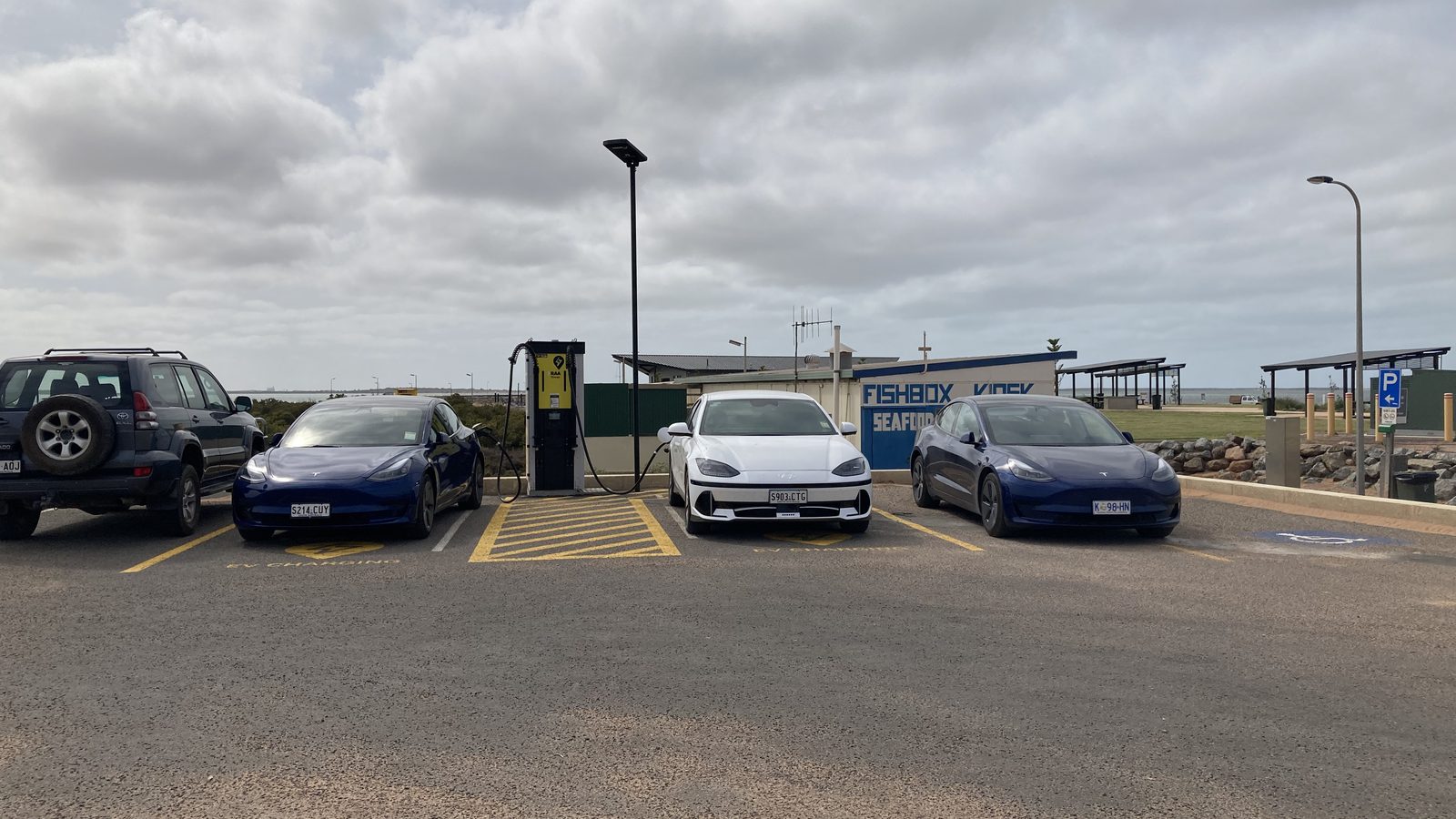
Image: Chuq, Wikimedia Commons, CC BY-SA 4.0
The Australian Energy Market Commission (AEMC) released a draft rule on 24 September that would let electricity networks help build public EV chargers in places the market has so far skipped. It supports the Commonwealth's $40 million Accelerating EV Charging Program, which aims to place about 14,000 chargers where they are most needed.
What the draft rule does
The program targets two gaps: regional charging blackspots, and high-density city streets where people have little or no off-street parking. That includes renters and apartment residents, who cannot install a wallbox at home.
- Participating distributors must identify sites and offer them to private charge point operators first.
- Where operators do not take up a site, the distributor becomes the supplier of last resort.
- In regional blackspots, distributors will be the supplier so chargers get built where they are commercially less attractive.
- The rule applies only to this Commonwealth program, which is scheduled to finish on 30 June 2029.
Who pays
The Commonwealth will fund about 30 per cent of the cost of eligible infrastructure. Participating networks recover the other 70 per cent from electricity customers. The AEMC estimates that adds about $1.00 a year to a typical residential bill for five years.
AEMC Chair Anna Collyer said the Commission was satisfied the program's likely benefits outweigh its costs to consumers, given its targeted and time-limited design. The largest single factor in that judgement was the program's likely emissions reduction.
Not everyone is convinced
Reporting by The Driven shows the proposal has critics. The National Electrical and Communications Association said putting up electricity bills to pay for chargers shows contempt for consumers in a cost-of-living squeeze, and argued the main barrier to charger rollout is the networks. Nexa Advisory's Stephanie Bashir said there is no clear evidence yet that the program will materially cut emissions or lift EV uptake, or that networks can deliver chargers faster or cheaper.
UNSW researcher Bjorn Sturmberg called the scheme imperfect but a useful way to get chargers in the ground and gather evidence for later policy. He said more attention should go to urban planning and less to electricity sector processes. The AEMC says it expects to coordinate with councils so chargers sit where people can actually park.
What happens next
Submissions on the draft close on 5 November 2026, and a final determination is due by the end of the year. The draft does not give networks any wider, permanent role in EV charging. Two separate rule change requests, from Energy Networks Australia and Nexa Advisory, are still being considered on that bigger question.
The timing matters because EVs took almost a quarter of new car sales in August. More buyers without a driveway means more pressure on public charging.
Practical takeaway: if you rent or live in an apartment and are weighing up an EV, do not count on a kerbside charger near you yet. Ask your strata or landlord about shared charging now, and if you want a say on the rule, you have until 5 November to lodge a submission with the AEMC.